Sharikov’s registration papers
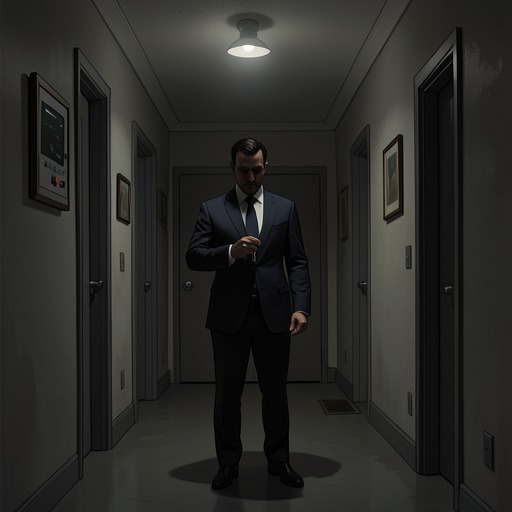
The Heart of a DogSharikov’s registration papers are the documents through which Poligraph Poligraphovich Sharikov seeks official recognition and acquires practical standing in Moscow. They begin as a demand for identity papers, become a certificate naming him as the product of a laboratory operation, and ultimately underpin his claims as a tenant and his appointment to the Moscow Cleansing Department. The papers make identity administratively legible, but their authority does not resolve the conflict over who created Sharikov, who is responsible for him, or what rights he may claim.
From Name to Administrative Identity
At first, the need for papers is presented as a condition of existence in the city. Sharikov tells Philip Philipovich that he cannot manage without them: people without papers are not allowed to exist, and the house committee is an immediate concern. He wants to be registered in Moscow and, more urgently, to receive an identity card so he will not be arrested as a deserter. His request frames registration not as a mere formality but as protection against being treated as an unrecognized or suspect person.
Naming is part of that effort. When asked what he will call himself, Sharikov proposes “Tोलigraph Poligraphovich” in the spelling given in the scene, then insists on using his real name as his surname. Shvonder subsequently supplies the full administrative form, Poligraph Poligraphovich Sharikov, in a proposed certificate. That progression—from a proposed personal name to a surname and a documentable full identity—shows the house committee helping translate an unusual individual into the categories required by local administration.
The recognition is contested from the outset. Philip Philipovich calls Sharikov an unnatural phenomenon and an artefact, and objects in principle to giving him documents. Yet he writes a certificate stating that the bearer is a man created in a laboratory experiment by an operation on the brain and that he requires identity papers. The document therefore records both an identity and the exceptional process by which it came into being. Rather than making Sharikov’s origins disappear, it places them inside the very instrument meant to establish his civil standing.
The Papers in the Housing Dispute
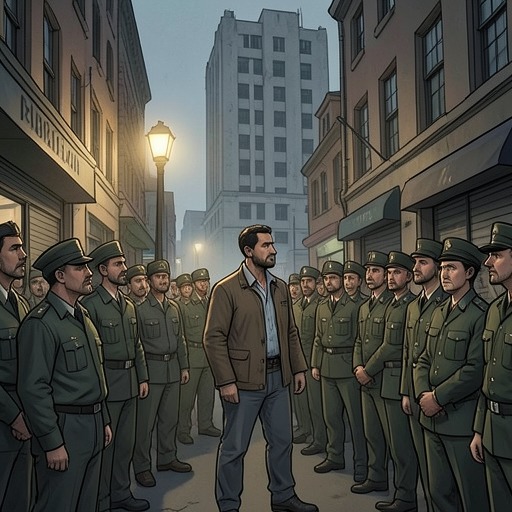
The certificate emerges against a wider struggle over space in the professor’s apartment. Shvonder arrives on behalf of the house management, citing a tenants’ meeting charged with increasing occupancy. The committee acknowledges the August 12 regulation exempting the apartment from an occupancy increase, but argues that seven rooms for one person are excessive. It asks the professor to give up the dining room and consulting room voluntarily, appealing to labour discipline and the claim that no one in Moscow has a dining room.
This dispute supplies the administrative setting in which Sharikov’s registration acquires force. Once he is accepted as a resident and member of the residential association, he presents three pieces of paper—one green, one yellow, and one white—and claims that the tenant in charge of flat No. 5, Preobrazhensky, must provide his entitlement of thirty-seven square feet. The demand converts papers into a concrete claim on domestic space. A status that began as a request for recognition now gives Sharikov a basis to challenge the professor within his own apartment.
The papers thus sit between competing kinds of authority. The professor invokes the occupancy exemption and his account of the rooms’ professional uses; the house committee presses its collective decision; Sharikov relies on the entitlement attached to his registered status. The documents do not simply settle the disagreement. They give one side a new instrument with which to press it.
From Certificate to Public Office
The papers’ reach extends beyond residence. Sharikov later announces that he has taken a job, and the doctors ask to see the paperwork. The typewritten sheet certifies that Comrade Poligraph Poligraphovich Sharikov has been appointed to head the sub-department of the Moscow Cleansing Department responsible for eliminating vagrant quadrupeds, including cats. Sharikov identifies Shvonder as the person who arranged the appointment.
This appointment marks a change in what documentation can do for him. The earlier certificate explains how he was created and why he needs identity papers; the job sheet assigns him a public role and authority over a department. The same institutional world that helps establish him as a resident now recognizes him as an officeholder. His papers are no longer only a shield against exclusion: they also certify access to employment and a position from which he can act upon others.
The contrast between the document and its bearer is central to the episode. The appointment is expressed in formal, typewritten language, while the narrative makes clear that the doctors react with stunned restraint when Sharikov announces it. The document’s administrative clarity does not make the circumstances less extraordinary. On paper, the laboratory creation is a duly appointed official; in the apartment, his growing institutional standing intensifies the conflict with the people who made and house him.
Accusation and Reversal
Sharikov also uses his official identity in a written denunciation. In a complaint signed “P. P. Sharikov,” he identifies himself as a sub-department controller and accuses the professor, Doctor Bormenthal, Zinaida Bunina, and Darya Ivanova of crimes and political disloyalty. The letter claims, among other things, that the professor threatened Shvonder, possessed a firearm, and ordered Zinaida to burn Engels; it also accuses Bormenthal of living secretly in the apartment without registration. Shvonder countersigns the document as chairman of the house committee.
Here, the papers’ logic turns against the household. Registration had first been sought to protect Sharikov from being treated as someone who could not properly exist in Moscow. His resulting official title now lends weight to accusations against the professor and his household. The complaint also brings registration itself back into the conflict: Bormenthal is presented as a suspect because he allegedly lives in the apartment without being registered. Documents make political accusations portable, formal, and actionable, even as the household disputes the account they contain.
The reversal culminates when officials arrive at night with a warrant to search the flat and, depending on what they find, arrest its occupants. The charge identifies the professor, Bormenthal, Zinaida Bunina, and Darya Ivanova as responsible for the murder of Poligraph Poligraphovich Sharikov, described by his official title in the Moscow Cleansing Department. The document trail that had helped establish Sharikov as a person and official now frames the others as suspects in his death. The professor answers by referring to Sharikov as the dog he operated on, a response that reopens the question of identity rather than accepting the administrative name as the last word.
Significance
The papers trace a sequence of institutional transformations: a name is proposed, a certificate explains an experimental origin, resident documents support a claim to thirty-seven square feet, an appointment sheet confers public authority, and a signed complaint turns that authority into a weapon. Each document confers a distinct kind of standing, and each carries consequences beyond the page.
The sequence also distinguishes biological or experimental origin from social recognition. Philip Philipovich can describe how Sharikov came to exist, but his certificate helps make Sharikov administratively recognizable; Shvonder’s support helps extend that recognition into residence and work. Once established, those statuses do not remain under their creators’ control. The registration papers are therefore both instruments of inclusion and mechanisms through which power shifts: they make Sharikov legible to institutions, furnish him with claims against the household, and allow his official identity to participate in a later accusation against its members.